
Antisemitism
A book review and an update

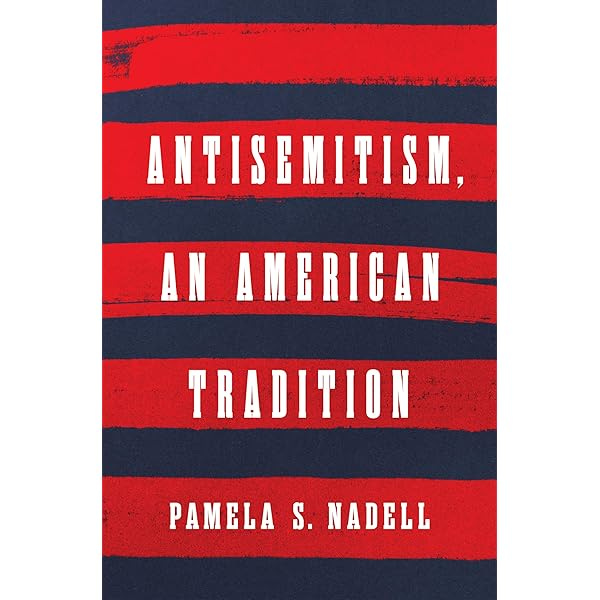
I hate antisemitism. I also hate bad books, especially bad history books. Some months ago I read Pamela Nadell’s Antisemitism, An American Tradition and fired off a review. Now, in January, the good folks over at the University Bookman—Russell Kirk’s book review publication based in Mecosta, Michigan—have published it. While I am harsh in the review, I should have been harsher. Books need justifications, and this is a book that does a disservice to those who believe serious questions deserve serious thought.
I wrote that
Nadell only hints at this strange theory of antisemitism. To fully explicate it, one could continue to take up examples from Nadell’s history and examine what they indicate. But to do too much of this would replicate her narrative just as much as it would replicate Wikipedia. Antisemitism, an American Tradition is chock full of potted anecdote after potted anecdote. At the book’s end, we have no sense of what exactly this “tradition” is or even what it means for there to be a tradition. All we know is that there were anecdotes of antisemitism in America in the past and in the present. There is no intellectual architecture defining a tradition or its contours.
Nadell declares at the beginning of her history that “antisemitism is the word that readers know signifies Jew hatred. Scholars, of course, argue heatedly about defining Jew hate. After all, making arguments and proving them is at the heart of what we scholars do. Nevertheless…I bypass those arguments. Instead, as readers will discover, the many episodes of anti-Jewish animus discussed in this book speak for themselves.” The problem is that these incidents don’t speak for themselves and we can only speculate. For example, she writes of someone whose roommates declared, “It’s not because you’re Jewish that we don’t like you.” What if they weren’t lying?”
Please do read the whole thing here.
In the months that have passed, I have read three more books about antisemitism. I’m not sure I want to write anymore about it though; perhaps the defining characteristic and burden of being a bookish American Jew is to have to read books about antisemitism. We shall see.
In other news, as most of you know, I, along with my good friends Tessa Augsberger and Rufus Knuppel founded and edit The New Critic, journal of youth essays and ideas. We were recently featured in an interview at the Republic of Letters, which may be of interest. Interviews can be boring—we tried to write interesting and truthful responses that were in line with our philosophy. The first question is good sample
1. According to all available evidence about your generation, you are supposed to be a brain-dead zombie scrolling TikTok. So what’s going on? How have you ended up starting a very serious literary magazine?
Rufus Knuppel: We’re not trying to be the voice of our generation. We’re only trying to create something that excites us. We are young and brash enough to think that, should we throw ourselves into the effort of editing essays of rigor and style, our peers would read and enjoy them. We believe in art, writing, reading, questioning. And we run The New Critic for the sect of young people who share that belief — what fraction of the generation that may represent, I don’t yet know.
Elan Kluger: Some months ago, Rufus and I were loudly debating about Substack or Philip Roth or something like that on the Tube in London. As we walked out, a woman pulled us aside, and I expected to get chastised for our brash American manner. Instead, she said “I’m an English teacher. I am so glad there are people for whom books still matter.”
There are certainly the brain-dead zombie types. I had roommates who spent nearly the entire day on TikTok. When they got the flu, their behavior did not change at all; they live as if they always have the flu. Clare Ashcraft, The New Critic and Republic of Letters contributor, may be right in her condemnation of our generation. I mean, I subscribe to the physical copy of Leon Wieseltier’s quarterly journal Liberties. I do not represent any generation; I barely represent myself. But our goal was to try to create the community we wanted to be around, rather than just give in and let the tidal wave of distraction subsume us all. I think our recent piece by Will Diana represents our philosophy. He set out to “find a scene among the corporate and the damned.” Read the piece to see how it turned out. Absinthe certainly helped.
Tessa Augsberger: Once, when I was very little, I was sent to my room as a time-out for something or other, and it occurred to me I could just sit on my bed and read, and it wouldn’t be a time-out at all. I had the same realization in college with writing and editing. It satiates me, and that’s all I can speak to.